
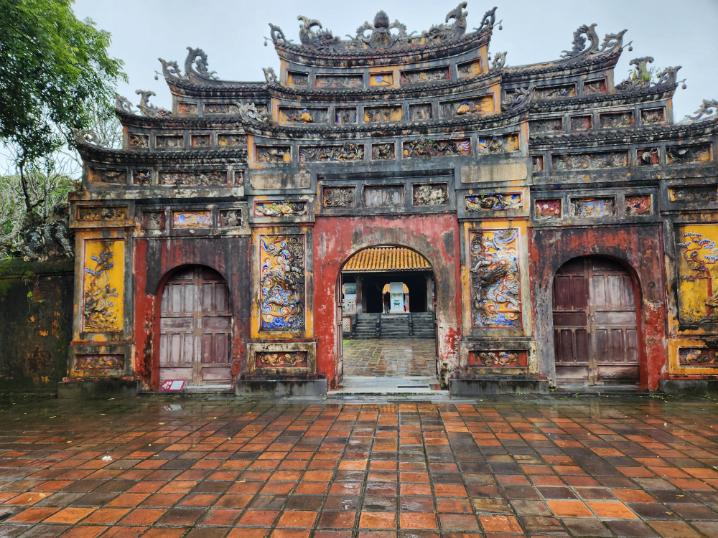
Yes – although it’s worth mentioning that our visit was severely impacted by the weather. The weather was quite bad, to the point of flooding and damage. Our feedback and photos are bound to be impacted by this.
I say yes, because Hue really is quite important to the ancient history of Vietnam. Both the Imperial Citadel and the royal tombs are very impressive and worth visiting. In better weather, the riverside and the central town are worth exploring either by cyclo or simply walking.
In Hue and throughout Vietnam, the three-wheeled bicycle-drawn carts are called a cyclo (spelled xích lô in Vietnamese). More about our cyclo (pronounced “sick-low”) tour below.
Hue: Hotel
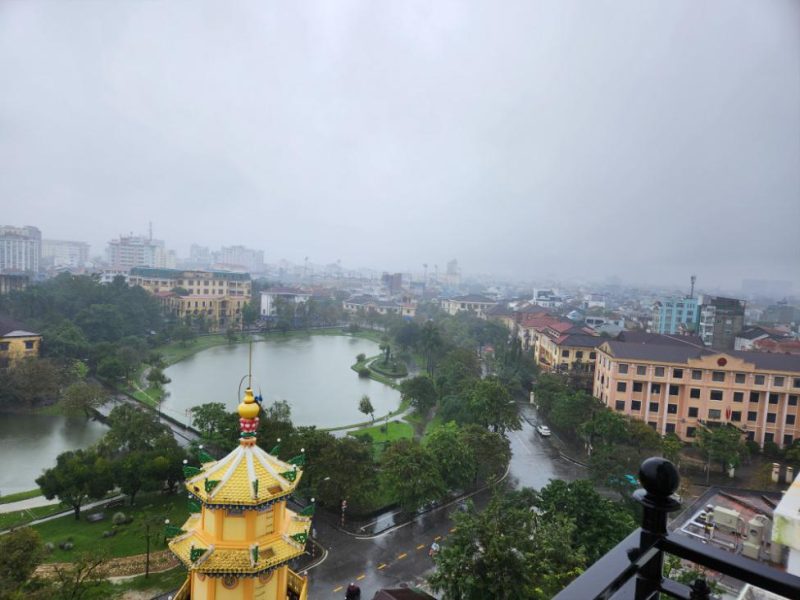
We booked into the Indochine Palace, which is a lovely modern hotel. Very luxurious, with large, comfortable rooms, outdoor gardens and a pool. It’s about a kilometre from the central Perfume River, a fifteen-minute walk in good weather.
You can walk across the river to the Imperial Citadel. Must admit, though, for location, next time I would choose a hotel closer to the river. There are a large number of homestays across the river surrounding the Citadel, if you prefer the smaller places.
Hue: Airport
We flew down to Hue Phu Bai Airport (HUI) from Hanoi with Vietnam Airlines. The airport is under 15 kilometres from the Hue central town, an easy twenty-or-so-minute trip by taxi. Da Nang International Airport (DAD) is the closest international airport to Hue, about a two-and-a-half-hour taxi ride. One can also use the express railway from Hanoi to Hue. This takes about fourteen hours, whereas the flight is just over an hour.
What we did in Hue
We had booked two tours in Hue, and I am glad we did, because the rain was so heavy. It is likely that we would not have gone anywhere had they not been pre-booked.
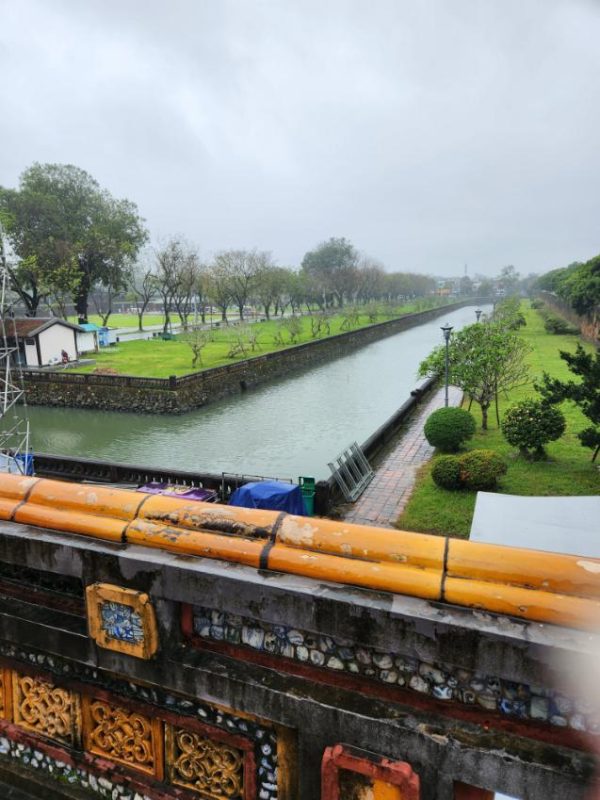
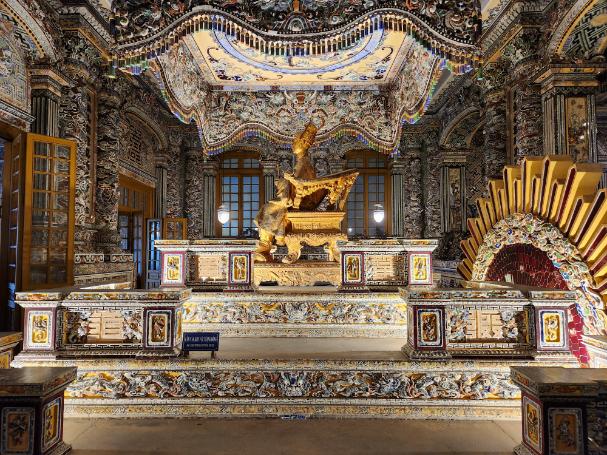
The first tour was to explore the Citadel, the Dong Ba Market and the Khai Dinh tomb. The first two, the Citadel and the market, are both on the Perfume River, so you can really walk to these. Keep in mind that the Citadel is massive, so it’s a long walk all around it, and then along the river to the market. Cyclos are handy to shortcut the walk along the river. A taxi or tour is handy for the Khai Dinh tomb, which is seven or eight kilometres outside the main town. The tomb is very impressive, built on a hillside, and worth visiting.
The second tour was a Hue Street Food by Cyclo tour, and this one was really impacted by the heavy rain, and consequently not that pleasant, unfortunately. They do cover the cyclos with a heavy clear plastic shield, but that mainly restricts your vision without really stopping the rain. The cyclo tour also visits the Thien Mu Pagoda, a seven-story pagoda built in 1601; again a great visit, especially with the trip along the river, as the pagoda is beside the Perfume River on the same side as the Citadel.
What else can you do in Hue?
There are quite a few other spots to visit, including two other tombs and the Thuy Xuan Incense Village. We also missed out on the Perfume River tours and the fishing tours on the Tam Giang Lagoon because of the weather. Both of these looked very promising. The river walks along the Perfume River also look to be a pleasure with the lights in the evenings.
Best time to visit Hue
Best time to travel to Hue is in the dry season.
Dry Season: February to August
December and January can still see rainfall from the dwindling previous wet season. This is a very popular holiday period because of Lunar New Year and year-end celebrations. Costs can rise during this period. We stayed here at the end of December, and it rained extensively.
February through April is an ideal time of year, much drier and not yet too hot.
May through August is peak summer and can be very hot (up to 35°C).
Wet Season: September to January.
Hue suffers a heavy monsoon season, with generally heavy to very heavy rainfall. It is very humid, with a reasonable risk of flooding.
Travelling during this season does carry a high risk of interruptions to your travel plans.
We went in late December, primarily because of school holidays. The monsoon rains definitely impacted our first impressions of Hue.
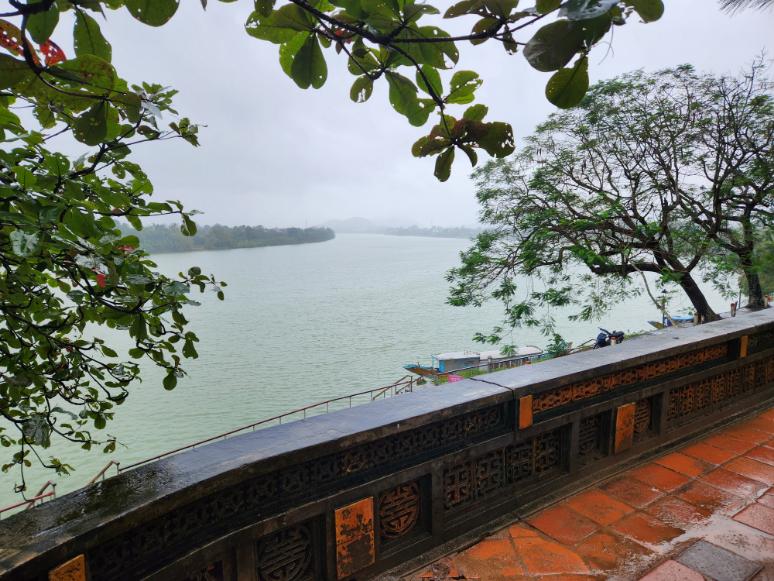
This is a shame because I suspect it is beautiful in the cheerful sun with the main Perfume River, the many canals and smaller rivers winding through the ancient city.
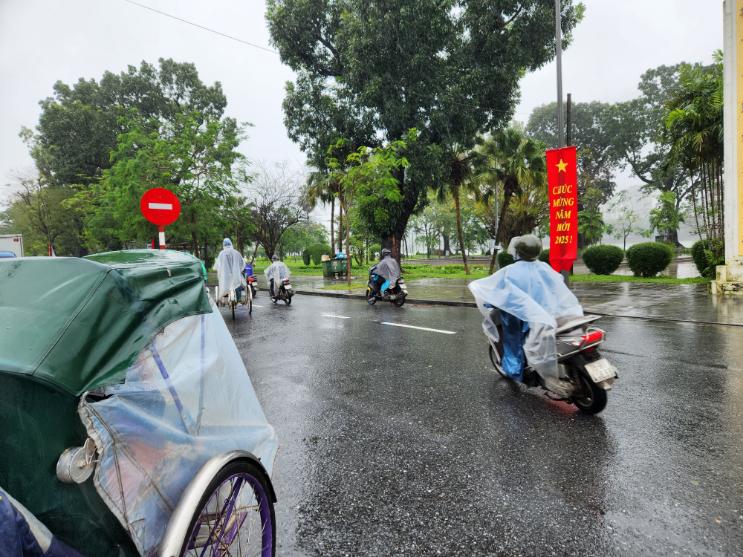
We had planned to drive down to Da Nang and Hoi An via the inner mountain road (think Clarkson and co used their scooters on this road). Landslides prevented this, and we had to use the coastal road through the ongoing rain.
Practical Tips before booking Hue
Where to stay in Hue?
Along the Perfume River would be my recommendation, closer to either of the two bridges, the Cau Truong Tien or the Cau Phu Xuan. Most of the hotels are on the opposite side of the river from the Citadel. Being close to the river gives you easy access to the river walks on both sides of the river, plus walking access to both the Citadel and the Cho Dong Ba market.
We made the mistake of staying in a great hotel back from the river; please see above in the blog, but it did mean well over a kilometre walk to the riverside. Not as convenient if walking back in the evening after a great meal. There are a few hotels on the coast on the strip of land between the sea and the lagoon behind. These do look great, but it’s about a half-hour drive back to the main city each day if you choose to stay on the coast.
This Vietnam Tourism website is a handy resource to help with your planning.
How long should you stay in Hue?
We stayed in Hue for 2 nights, giving us one full day in the city. Now the weather was abysmal in December. We didn’t get the chance to relax and explore the town, the river, or the nearby lagoons. We took two tours on the one day. The first took us to the Citadel and only one of the tombs, the other took us to the market and the Thien Mu Pagoda.
The impressively heavy rain made it very difficult to see much, but I would say that one day is not sufficient to explore the city. We essentially saw a couple of tourist locations, but not the city, so think three nights would be better, giving you at least two full days to explore.
Should you take the local tours
If you are within walking distance of the Citadel and the Cho Dong Market, then you could easily explore those without using a tour. There are plenty of taxis around if you are tired.
For the other locations, like down to the Tam Thanh Lam lagoon or the beach, the tombs, which are further outside the central city, the tours may be more efficient, as we did not see many cyclos out at the more distant spots to get back from.
The Grab taxis are useful here, but you may still have to wait a bit, whereas the tours can move on more quickly from one remote location to the next.
Do you need a Hue street map?
Make sure you have access to either online maps or offline GPS maps, as you will not always find, or at least recognise the signs amongst everything else, so GPS is a great help wandering up and down windy and diagonal streets.
Final Review of Hue
I have to admit I do not feel like I can give you a full review here. The rain was so heavy most of the time during our short stay here. The tours that we did, did give us great coverage of the Citadel, one of the three tombs, the local market and one of the pagodas, but I can’t give any real feedback on the city.
The rain was so heavy most of the time; visibility was measured in tens of meters, not hundreds. The sights we did see, were amazing, no doubt about that. The buildings and architecture (and size of the Citadel) are both impressive and amazing and well worth exploring.
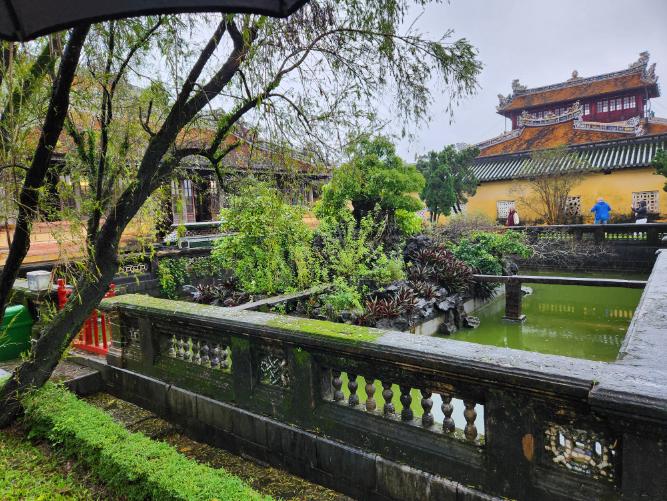
The gorgeous river, the river walks, the town itself – we saw not much of. I really want to come back here again.
Is it safe in Hue?
The traffic in this city is quite heavy, but not as busy as Hanoi. We enjoyed ourselves everywhere we went and found the locals and tour guides to be so friendly and helpful.
This was the only town in Vietnam where we did not walk about late in the evenings, simply because of the extraordinarily heavy rain. It did feel like flooding was our biggest risk, so I highly recommend not visiting this area during the wet season if you can help it.