
Ninh Binh Province
Ninh Binh is a beautiful province in northern Vietnam, located about a hundred kilometres south of Hanoi. Trang An is another Vietnamese UNESCO World Heritage site with amazing waterways, limestone caves and rice paddies. Hoa Lu is the ancient 10,11th century capital city of Vietnam.
This area has been called ‘Ha Long Bay on land‘ due to the riverine landscape and the steep limestone mountains rising from the rice paddies.
Hoa Lu, Mua Cave and Trang An Review
The tour that we booked from our hotel in Hanoi allowed us to spend the full day exploring.
We visited the Hoa Lu ancient capital, the Mua Cave and Hang Mua Mountain. We went for a cycling tour through the rice paddies surrounded by limestone mountains and explored Trang An via a Sampan boat.
We visited the sacred temples Den Trinh in the river valley and then climbed Lying Dragon Mountain above Mua Cave.
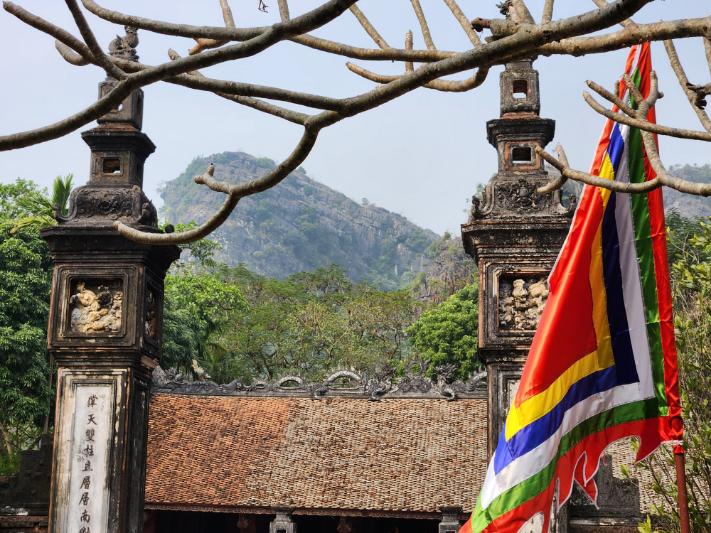
Ancient city Hoa Lu
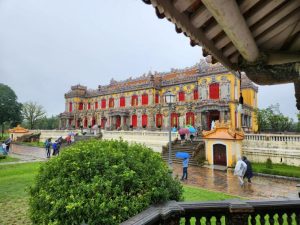
The ancient city Hoa Lu is impressively large. It is notably more run-down than the ancient buildings in Hanoi, which is a real shame. The weather stayed overcast through most of the day, which was disappointing. It does look a little grey in the photos, but the area is beautiful and quite impressive.
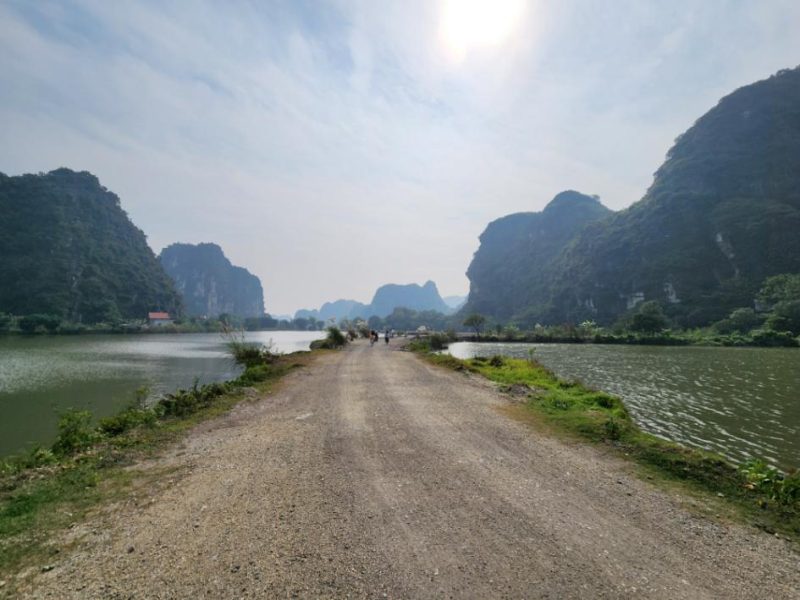
Paddy Field Cycle Ride
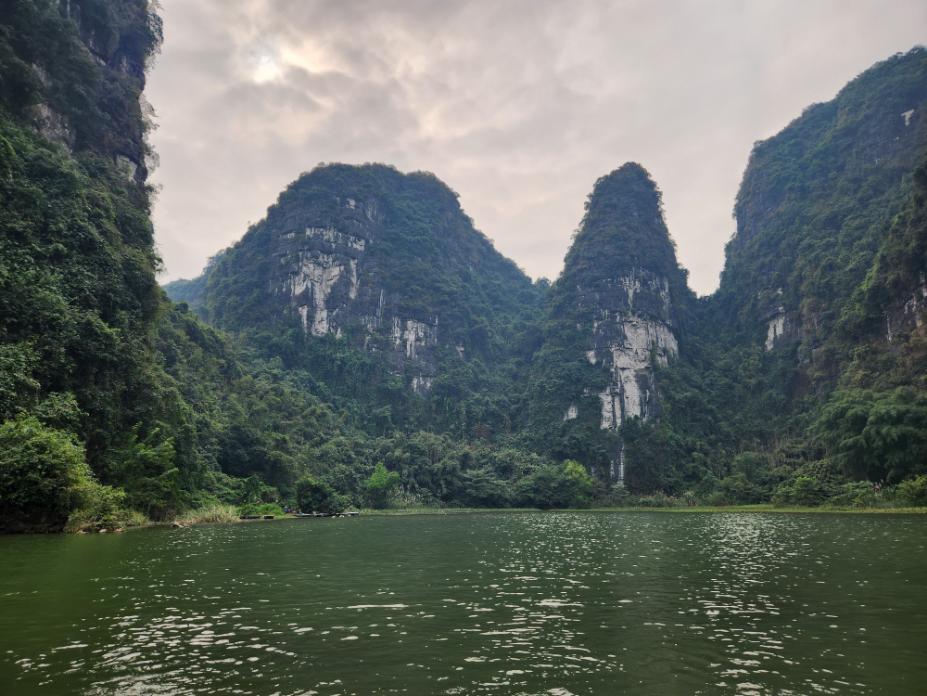
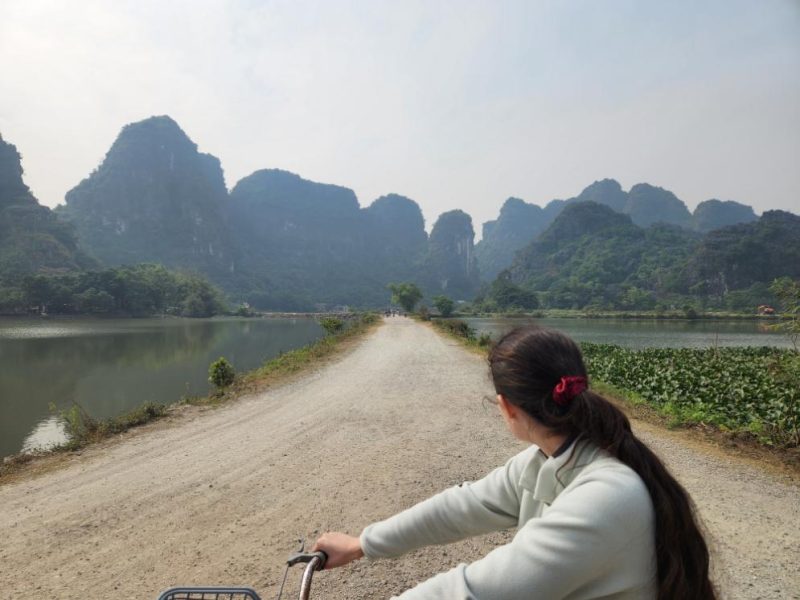
After the capital city, we cycled through the valley and the paddy fields. Would you believe it, the sun came out for a while. The local guide mentioned that Kong: Skull Island had been filmed here. I have no idea if this is true, but riding down through the valley and between the tall limestone mountains, it is pretty dramatic scenery, and I could easily imagine it to be true.
Sampans on the Trang An River
After a well-earned delicious lunch at the Trang An Heritage Garden, we went over to the Trang An River to take the sampans down the river towards sacred temples.
These sampan trips are amazing; no other way to put it.
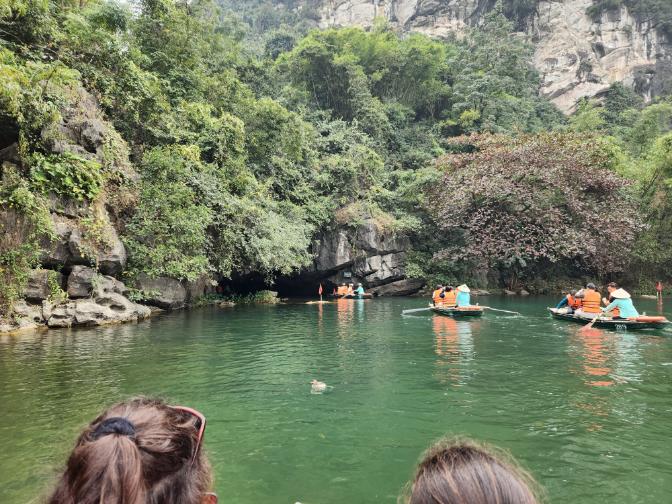
During the course of this, you go through three separate river tunnels, through to what appear to be totally isolated river valleys, with awesome old temples somehow built in them. I am assuming there are roads or tracks into these valleys, but I never saw them.
The river tunnels start shorter, very handily, with the first tunnel Hang Lam Lam Cave only being about sixty meters long. As you float into it, you can see daylight at the other end.
With the next two tunnels, that’s not the case, and you most definitely cannot see the end, because they are so much longer.
The third tunnel Hang Thanh Truot Cave, being more than three hundred meters long, is the longest. The tunnels also twist and turn under the mountain, they are not straight!
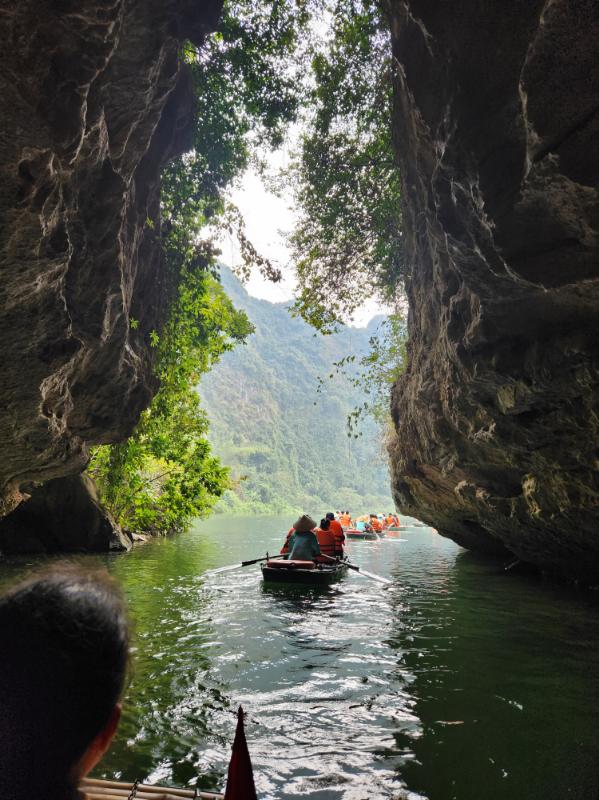
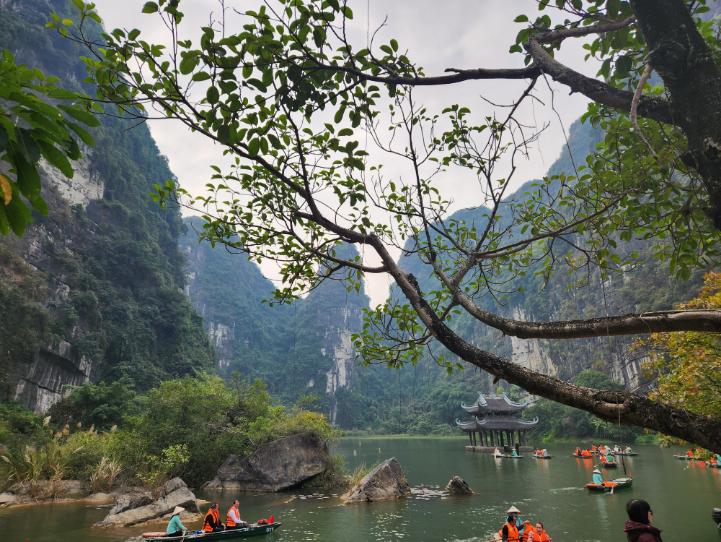
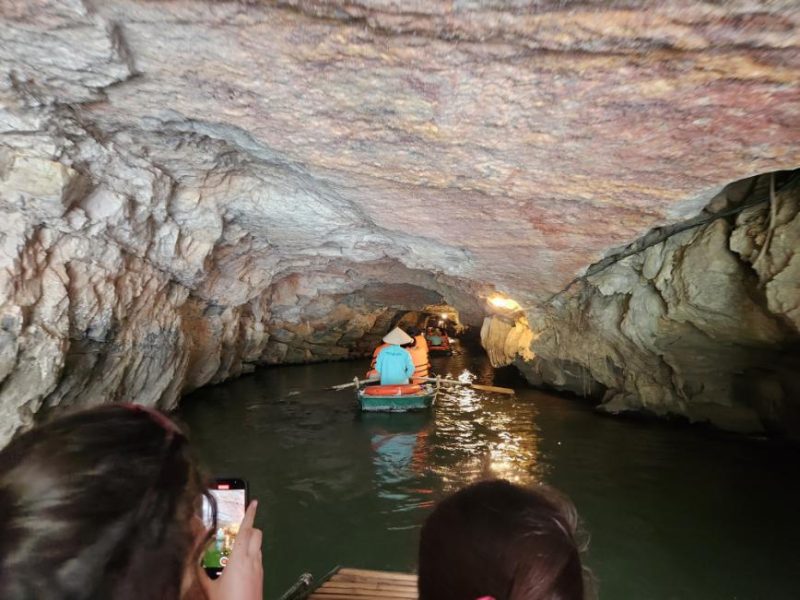
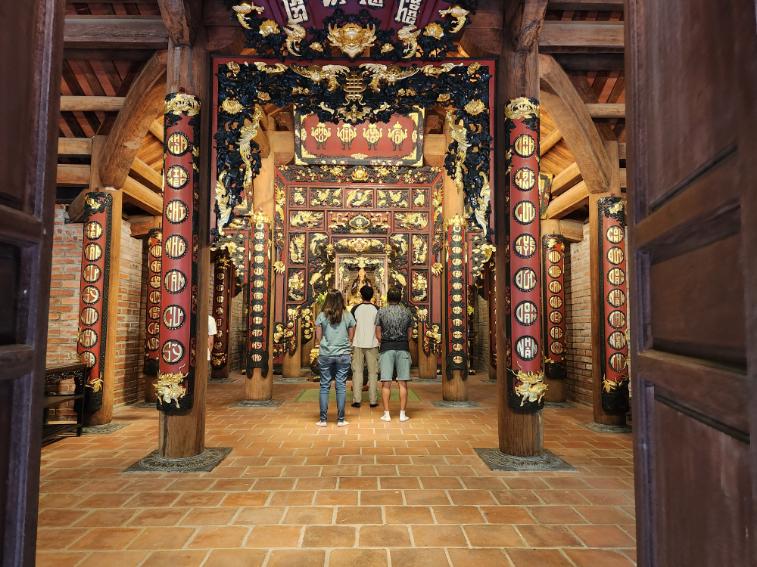
What is amazing is that in these little, somewhat mysterious river valleys are the pretty impressive temples. There must be tracks into these valleys because I cannot see how they made these huge ancient buildings.
The Geological Features of Karst Landscapes in Ninh Binh
Both Tam Coc and Trang An are part of the broader Trang An Landscape Complex, which is a UNESCO World Heritage Site. This is recognised precisely because it is one of the world’s most exceptional examples of a submerged karst landscape.
Because the rock dissolves rather than just eroding from the wind or surface water, it creates distinct, dramatic structures. The towering, steep rock mountains we see in Tam Coc and Trang An are specifically known as tower karsts or cone karsts.
Geological Features of Karst Landscapes
- The Towers: The massive cliffs rising out of the rice fields are the leftover blocks of limestone that didn’t fully dissolve.
- The Caves: The water eats its way through the bottom of the mountains, creating the long, flooded subterranean cave passages you boat through.
- The Waterways: Karst regions often feature underground rivers, springs, and sinkholes where the surface water has eroded deep into the stone.
Is the Ninh Binh tour worth it?
The day tour of Ninh Binh was excellent, and excellent value for what we got. An excellent lunch, luxury private coach, bicycle tour and Sampan boats + the temples – there is so much to see.
The tour left me wanting to come back and stay in Ninh Binh for a few days.
Best time to visit to Ninh Binh
Ninh Binh has a lot of water around at the best of times, because of the river and rice paddies. The wetter monsoon periods of the year would be best to avoid if you can. We visited Vietnam in December, which is not the best time to visit Ninh Binh as there is a high chance of overcast skies and fog, and it was overcast most of the time we were in Ninh Binh.
Best Time: May to June and September to October
Summer (May to Aug) – best time for photography. Hot and humid, but bright colours from the golden rice paddy’s.
Autumn (Sep to Nov) – best overall time to visit, slightly cooler with lower rainfall.
Worse time: July through August and December through January
During July and August there can be heavy monsoon rains. During December through January – it can be cold and foggy.
Practical Tips before going to Ninh Binh
Where to stay in Ninh Binh?
The best two areas to stay are probably Tam Con and Trang An.
Tam Coc is the main tourist area, in the middle of limestone tower karsts and the river, but close to all the restaurants, offering easy access to the cycle and sampan rentals and tours.
Trang An, where Kong might have filmed, offers a more secluded setting with the limestone karsts and rice paddy fields. The two locations are about ten or twelve kilometres from each other, with easy access by taxi.
Is it safe in Ninh Binh?
The area is fairly busy with tourists, but appears to be fairly safe even riding around on the bicycles.
Is it expensive in Ninh Binh?
The hotels in Ninh Binh are cheaper than the equivalent in Hanoi, anything from a quarter to half of an equivalent hotel in Australia.